HomePolicy recommendations
Protected Cultivation 2.0
Our roadmap to take India's protected-cultivation scheme from success to scale, and help progressive farmers compete globally.
From Success to Scale
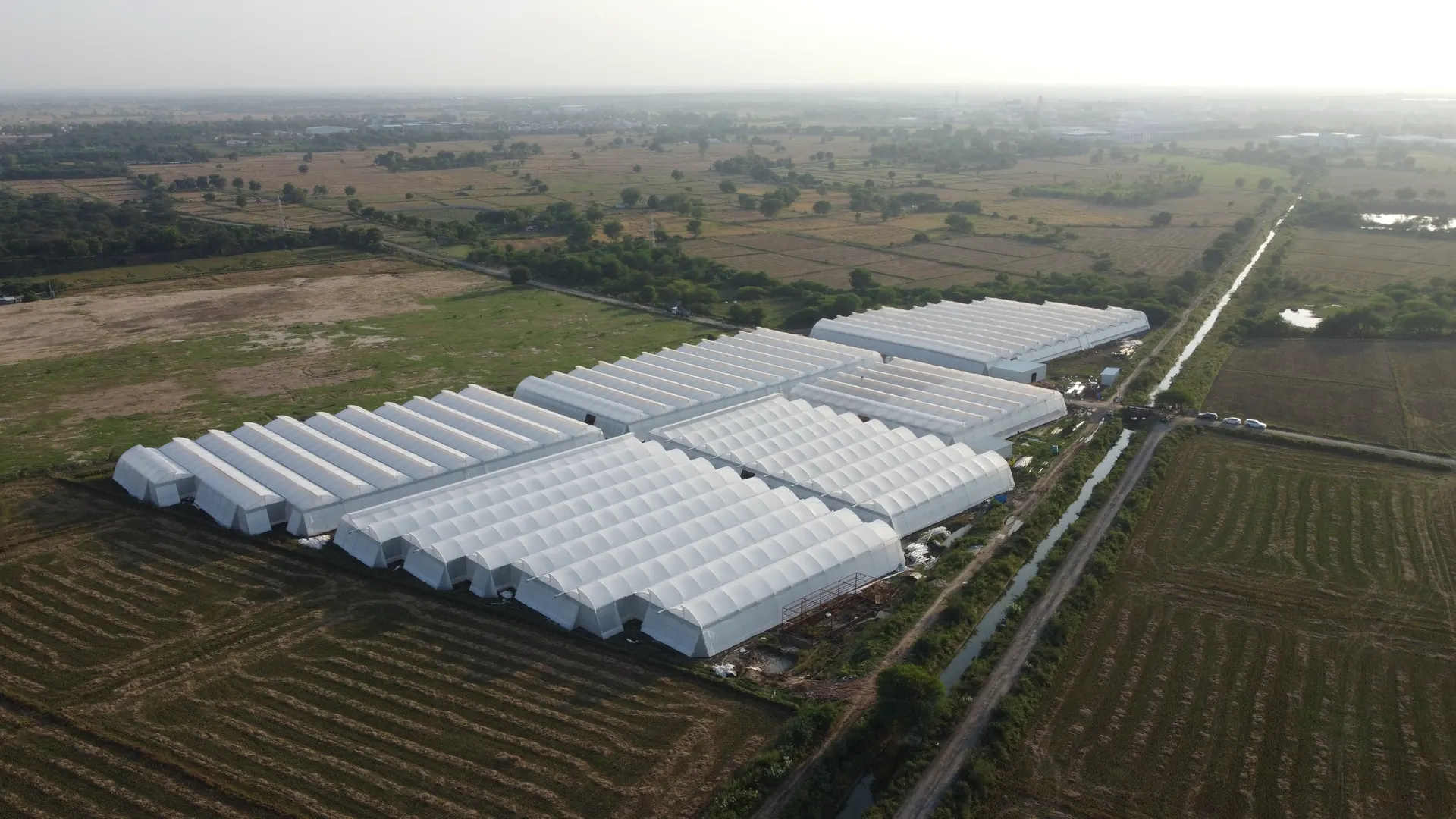
NHB's protected-cultivation scheme is one of the most successful farm-investment programmes India has run. Demand has now outgrown the resources given to it. Built on NHB's own published data, this 31-page paper sets out 14 practical steps, each within the Government's existing powers.
- 4.4×growth in NHB protected-cultivation approvals, FY 2023-24 to FY 2025-26
- 86%of approved projects are 2.5 acres or smaller, across 22 States
- ~43,500year-round rural jobs from NHB-approved projects (IGMA estimate)
- ₹338 crGST generated by NHB-approved projects since FY 2023-24 (IGMA estimate)
Fourteen steps in six groups
The first two are budget decisions. The one-time provision is the most urgent; the doubling is proposed for Budget 2027-28.
-
One-time provision for existing commitments
About ₹1,025 crore for approved files and applications already filed, paid over 12 to 18 months as projects are completed.
About ₹1,025 crore of subsidy is already in the pipeline. It can be met at the Revised Estimates stage, and it is paid only after a verified asset exists.
Who acts: Ministry of Agriculture; Ministry of Finance
-
Double the annual allocation from Budget 2027-28
Raise the protected-cultivation allocation from about ₹500 crore to at least ₹1,000 crore a year.
The constraint is money and capacity, not demand. One year of approvals at today's demand needs the whole current allocation. Each ₹1 of subsidy brings about ₹1.10 of farmer equity and bank credit, ₹2.10 of investment in total.
Who acts: Ministry of Agriculture; Ministry of Finance
-
More staff and digital systems
Additional technical posts in proportion to the rise in files, and end-to-end digital processing.
Approvals rose from 293 in FY 2023-24 to 1,293 in FY 2025-26. Demand grew faster than anyone foresaw, and the people and systems that process files need to grow with it.
Who acts: Ministry of Agriculture; NHB
-
A steady committee rhythm
Project and release committees at the frequency in NHB's order of 6 May 2026, with weekly PEC meetings and a Grant of Clearance within 30 days.
Farmers, banks, suppliers and workers plan around clearances. At last year's pace, about 430 projects and ₹350 crore of investment have been held back since 18 June 2026.
Who acts: NHB
-
An annual quota
Allocation in acres and rupees, by State, published on 1 April. Applications taken in order of filing, with a waitlist.
A published quota lets farmers and banks plan, and matches approvals to the budget available.
Who acts: NHB
-
Continuity and reopening
Filed applications continue under the rules in force when they were filed. New applications reopen against the quota.
Loans are sanctioned, materials ordered and crews booked on the rules in force when a farmer applies.
Who acts: NHB
-
Indexed norms and notice of change
Yearly revision of cost norms, and six months' notice of any change, for new applications only.
Raw-material costs have risen about 25% while cost norms stayed fixed. Real support has fallen from 47% to about 38% of the actual project cost with no change in policy, and would fall to 27% at a 35% rate.
Who acts: NHB
-
GST at 5%
For protected-cultivation structures and components supplied for agricultural use.
Most components carry 18% GST while other agricultural products are at 5%. About a third of every subsidy rupee returns to Government as GST.
Who acts: GST Council, through the Ministry
-
Area slabs per family
50% on the first 5 acres and 35% on area above 5 acres, applied to the family's total protected area, within NHB's ₹1 crore ceiling per beneficiary.
99.1% of approved projects are 5 acres or smaller, so they stay at 50%. Linked family files are mostly small family farms, and a family ceiling makes splitting files pointless.
Who acts: NHB
-
Build on AIF
Scale NHB so more farmers use both supports while AIF runs to 2032-33, and track AIF-financed NHB projects together.
NHB's 2025 reform and AIF's extension to protected cultivation in October 2024 drove the scheme's growth. AIF support becomes a farm only when NHB's subsidy makes the project viable.
Who acts: Ministry of Agriculture; NHB; banks
-
Monthly scheme dashboard
Applications, approvals, inspections, releases and commitments, by State.
One shared set of numbers helps Government, banks and farmers see demand and commitments early.
Who acts: NHB
-
Beneficiary and jobs data
Age, gender, education and jobs created, recorded for every project.
Each acre keeps about 10 people in year-round work, and the scheme is bringing young Indians back to farming. Recording it shows the return on public money.
Who acts: NHB
-
Support for young growers
Crop training through States, KVKs and empanelled manufacturers for the first two crop cycles.
The first crop cycles are the most fragile. Training at that stage protects the farmer's investment and the bank's loan.
Who acts: NHB; State Governments
-
A permanent seat for the sector
Permanent seats for one growers' body and one manufacturers' body (IGMA) on the NHB Board and the MIDH General Council or Executive Committee, or on any national policy body for protected cultivation, with structured quarterly consultation.
A standing channel brings ground-level insight from the field into every decision, before policy changes reach farmers.
Who acts: Ministry of Agriculture; NHB; MIDH
Rupee figures are IGMA estimates. Source: From Success to Scale, Policy Paper for Protected Cultivation 2.0 for India, October 2026.